Sometimes my shoulders would start feeling tight and tired before the day was even over.
I’d still have patients left to see, but my upper back was already tightening up, and holding my arms up suddenly felt harder than it did that morning.
Not sharp pain exactly. More like that deep muscle fatigue that slowly builds throughout a clinical day.
If you work in dental hygiene, you probably know the feeling.
By the end of the day, your shoulders, upper back, and arms can feel completely spent, even when you’re trying to position yourself well.
So why do dental hygienists’ shoulders feel so tired after work?
Dental Hygiene Requires Sustained Effort
One of the biggest reasons is something we don’t always think about while we’re working: how long we’re holding our arms and upper body in the same general position.
During a clinical day, hygienists spend hours:
- holding instruments
- stabilizing mirrors
- retracting
- maintaining fine motor control
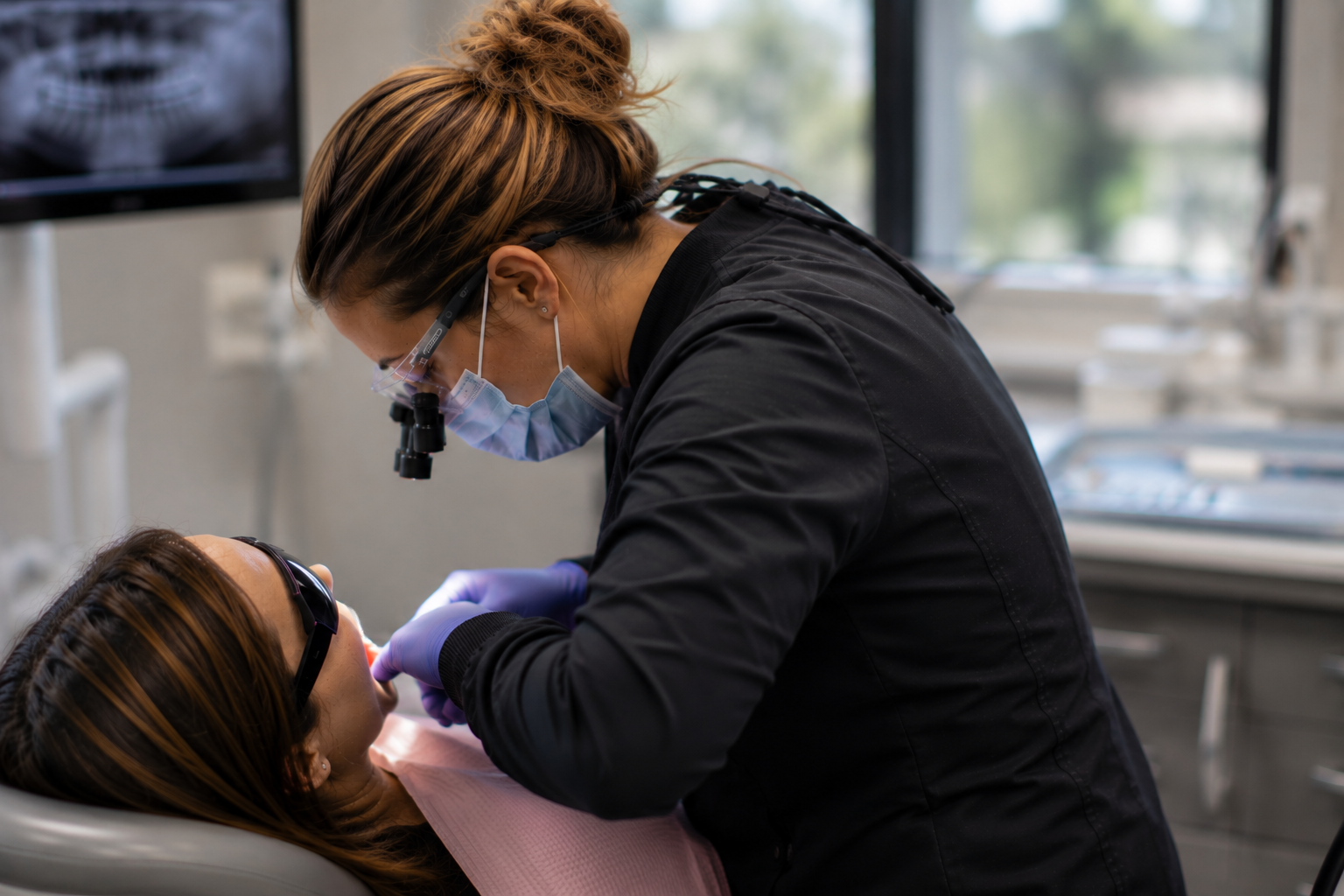
- leaning forward to focus on a small working area
Even though these movements may not look physically intense from the outside, they require steady muscular effort for long periods of time.
Your shoulders, upper back, and core are constantly working to support your arms while you work on patients.
Eventually, those muscles start getting tired.
Your Upper Back Is Working Harder Than You Think
A lot of hygienists focus on the neck and shoulders when discomfort shows up, but the upper back plays a huge role here, too.
The muscles around your shoulder blades help maintain your posture and keep your arms stable throughout the day. When those muscles become overworked, your shoulders often start feeling heavier and harder to hold up comfortably.
That’s one reason many hygienists notice:
- shoulder fatigue
- upper back tightness
- burning between the shoulder blades (this is a big one for me!)
- tired arms during long appointments
Especially during busy schedules with very little recovery between patients.
Repetition Adds Up
Dental hygiene isn’t just physically demanding because of posture. It’s also repetitive.
The body doesn’t just respond to how much work you’re doing. It also responds to how often you’re doing it.
Scaling, instrument stabilization, retracting, and maintaining precise positioning all require the same general muscle groups to keep working again and again throughout the day.
Eventually, those areas can start feeling fatigued long before the day is over.
Why Stretching Sometimes Only Helps Temporarily
Stretching can absolutely feel good after a long day. I still think mobility work has an important place in helping hygienists feel better.
But sometimes the issue isn’t only tightness.
Sometimes the muscles supporting your posture and arm positioning are simply getting tired from the workload they’re handling all day.
That’s where things like strength work and muscular endurance can become really helpful for hygienists.
Building strength and endurance can help those long clinical days feel a little more manageable.
What Can Help Shoulder Fatigue in Dental Hygiene?
Often, what helps most is giving your body movement that looks different from the positions you stay in while working on patients.
That may include:
- upper back and shoulder strengthening
- mobility work for the thoracic spine and shoulders
- movement variability throughout the day
- improving muscular endurance
- building stability around the areas doing the most work
For many hygienists, this combination helps the body tolerate the demands of clinical work more comfortably over time.
Ready to Address Shoulder Fatigue at the Source?
Most hygienists have tried some combination of stretching, massage, mobility work, or adjusting their operatory setup.
Those strategies can absolutely help. But if your shoulders still feel tight and tired halfway through the day, it may be worth looking at whether the muscles doing the work have the endurance to keep up with the demands of clinical hygiene.
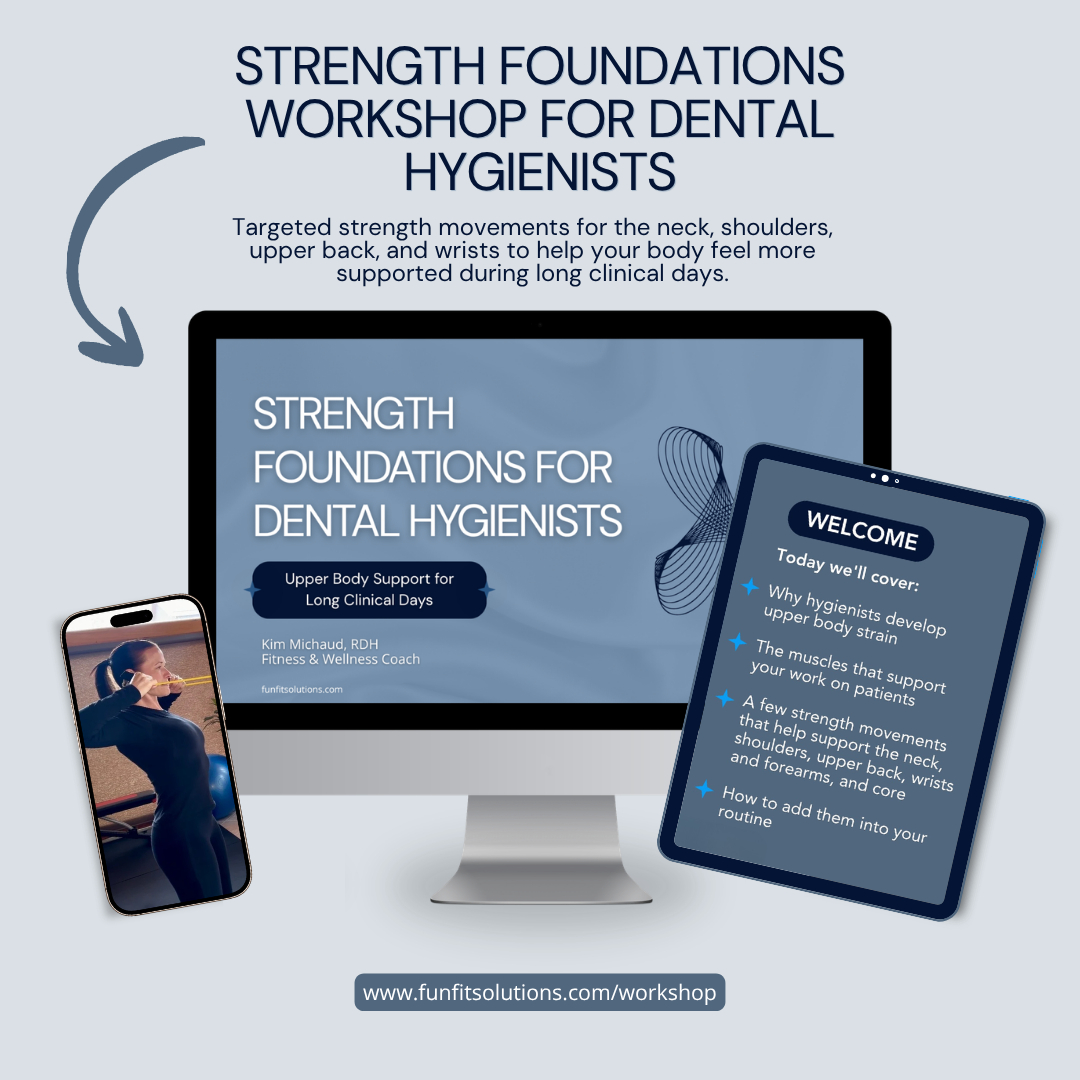
That’s exactly why I created Strength Foundations for Dental Hygienists.
Inside the workshop, you’ll learn practical exercises that target areas many hygienists struggle with most, including the upper back, shoulders, neck, forearms, and core.
You’ll also learn how these areas work together to help you move and work more comfortably throughout the day so you feel less drained by the time you head home.
The workshop focuses on helping your body handle the physical demands of hygiene life with a little more ease and a little less fatigue.
If you’re looking for a practical approach that goes beyond stretching, Strength Foundations may be a good next step.
👉 Join: Strength Foundations for Dental Hygienists
The Takeaway
Shoulder fatigue in dental hygiene is incredibly common, especially during long clinical days filled with repetitive movements and sustained positioning.
Your body is doing more work than most people realize while you’re working on patients.
Over time, though, giving your body more support, movement variability, and strength can make a difference in how those days feel.
And it doesn’t have to be extreme to help. 💜