One day, a coworker came to me because the spot flared up between her shoulder blades. You know the one.
I found the spot and applied firm pressure while she slowly raised and lowered her arm a few times, focusing on her breathing.
She didn’t say much after, and I never got a follow-up text, so I had no idea if it helped.
A few days later, another coworker came up to me and said, “I heard what you did. Do it to me! She said it worked magic.”
And that’s basically how my in-office trigger point therapy started. 😂
Most of us don’t think of this as myofascial release. We just know something feels tight, and we want it to feel better.
But when you start looking into myofascial release at home, it can feel a little unclear where to begin, especially as a dental hygienist dealing with the same areas over and over again.
What Myofascial Release Actually Is
Myofascial release sounds more complicated than it needs to be.
At its core, it’s applying pressure to an area of tension and giving the tissue a chance to settle.
That tension builds in the muscles and fascia over time from how we move, how we hold ourselves, and how long we stay in certain positions. And in dental hygiene, those patterns repeat all day.
When you apply steady pressure to a tight area and pair it with slow breathing or gentle movement, you may notice things start to soften or move a little more freely.
Sometimes the change is small. A little less tension. A little more ease. Less pulling when you go back to work on patients.
Why Hygienists Feel Tension in the Same Areas
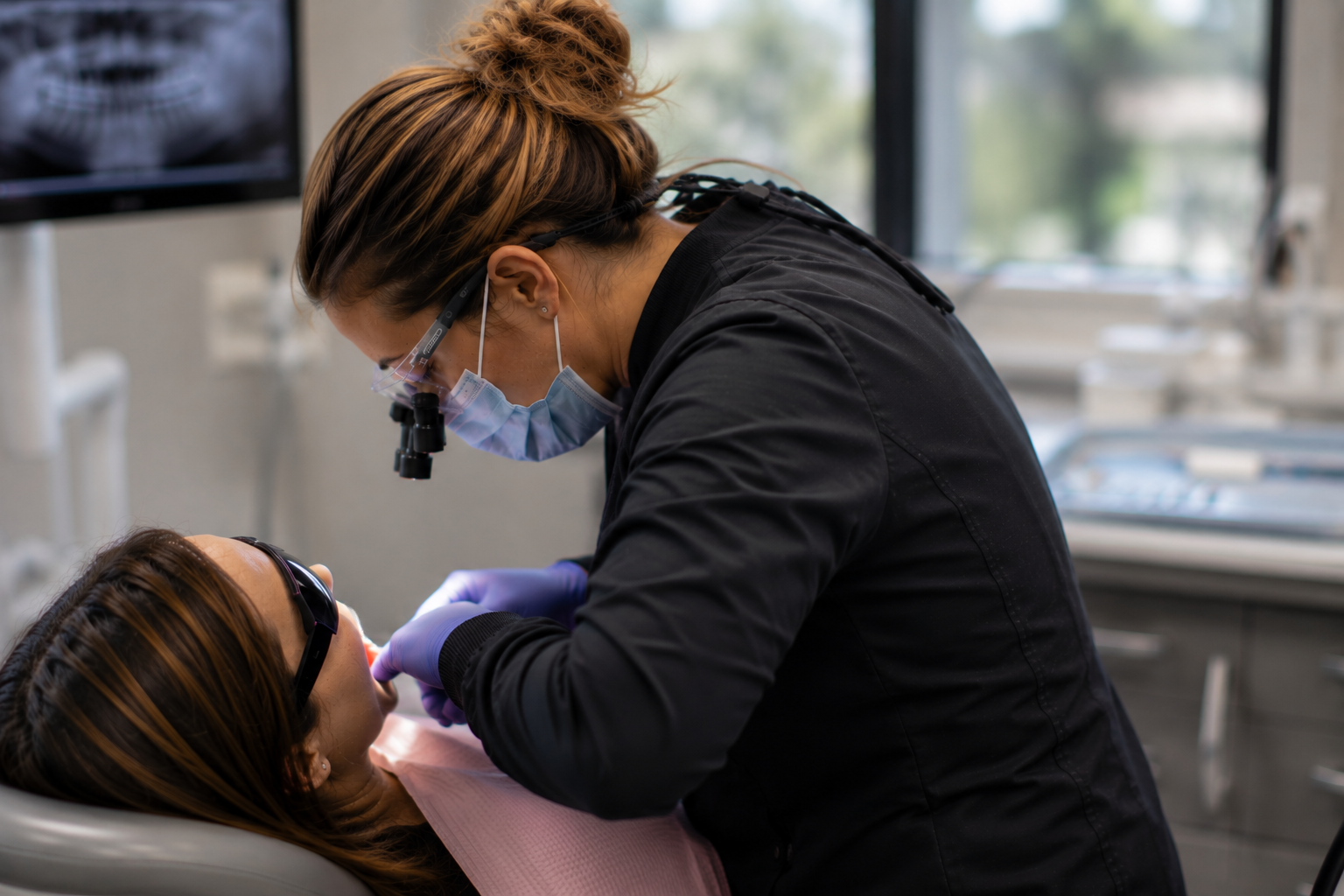
If you’ve ever felt like it’s always the same spots, your upper back, shoulders, neck, or forearms, there’s a reason for that.
Dental hygiene is repetitive. The same positions and movements show up again and again throughout the day.
Over time, certain areas end up carrying more of the load. The tissues in those areas can start to feel tight, restricted, or just uncomfortable.
That’s usually the spot people press on and say, “That’s it right there.”
But that spot is often part of a bigger pattern.
The upper back, shoulders, neck, and forearms are all working together during clinical work. When one area starts to fatigue, the surrounding areas often pick up the slack, which is why those same spots keep showing up.
Where to Start with Myofascial Release at Home
If you’re not sure where to start, you’re not alone.
Most hygienists feel it in a few familiar areas by the end of the day. That’s usually the best place to begin.

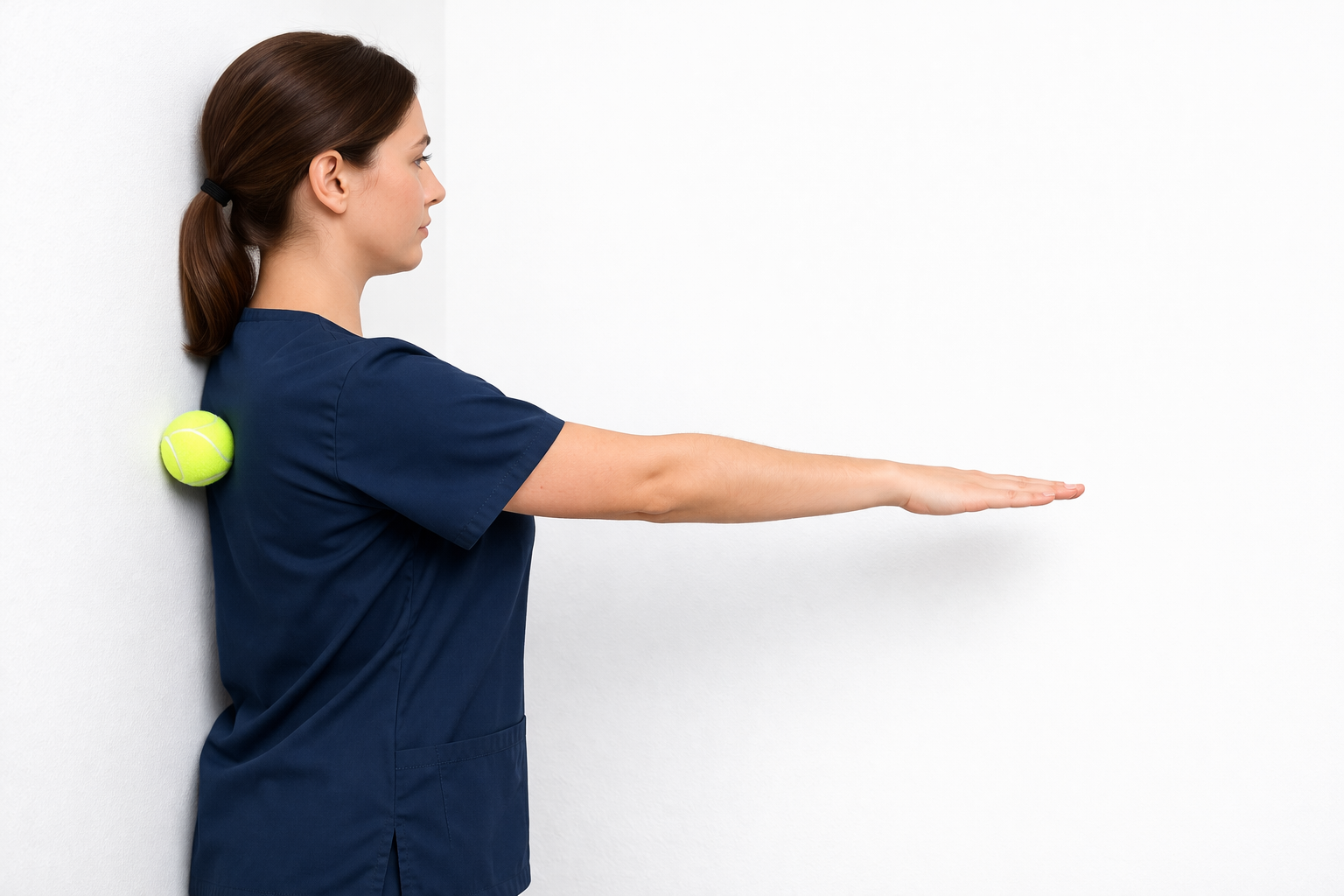
For many, that’s the upper back. That “between the shoulder blades” spot that always seems to show up after a long day. Using a ball against the wall or something like a Body Back Buddy (pictured) to apply pressure can help you explore that area while you gently move your arms or focus on your breathing.
The shoulders and neck tend to follow closely behind. These areas often hold a lot of tension from how we position ourselves while working on patients. Using a ball along the back of the shoulder or near the base of the neck can be a simple way to check in with those spots.
The forearms are another big one in hygiene. Between gripping instruments and repeating the same motions, they can get tight quickly. Applying gentle pressure with your opposite hand or using a small tool can help bring some relief.
And then there are the hips and glutes, which don’t always get as much attention but play a big role in how you’re supported throughout the day. Spending a little time there can make a noticeable difference in how everything above it feels.
You don’t need to do all of this at once.
Starting with one area that feels the most noticeable at the end of your day is more than enough.
How to Approach It
It’s easy to think you need to do more for it to work.
But more pressure isn’t always better.
A slower, more controlled approach tends to go a long way. Applying steady, tolerable pressure and giving your body a little time to adjust often feels better than jumping from spot to spot or pressing as hard as possible.
Your breathing can help guide you. If you find yourself holding your breath or tensing up, that’s usually a sign to ease up a bit.
A few minutes is enough.
This doesn’t have to turn into a full routine or another thing on your to-do list. It can be something simple you come back to when your body feels like it needs it.
Want a Different Approach?
If you’ve tried pressing into tight areas and want something that feels a little different, cupping is another option I come back to often.
Instead of applying pressure into the tissue, cupping gently lifts it. Some people find that this feels less intense and easier to relax into, especially in areas like the upper back and shoulders.
It’s something I’ve used to help relieve the tension that builds up from long days working on patients, and it’s been a helpful addition alongside simple movement and strength work.
If you’re curious about how I use it and where I typically apply it, I walk through that in more detail here. 👉 >>Read: Cupping for Myofascial Release<<
Whether you use something like this or keep it simple, the goal is the same.
The Takeaway
You don’t need to overthink where to start.
Pay attention to what your body is asking for and give it a little space to move, soften, or reset.
Over time, those small check-ins can make a noticeable difference in how your body feels during the day.
Your body should support you, not the other way around. 💜