One day, I caught myself getting irrationally angry at an ultrasonic cord that kept getting tangled.
You know the one. The cord that acts like it has a mind of its own. The one that feels like you’re playing jump rope with it all day long.
It was a normal schedule. Fine patients. Nothing out of the ordinary. But in that moment, I felt so overstimulated and so done that I had to pause and laugh at myself.
Not because the cord was the real problem. It wasn’t.
It was just the final tiny thing on top of everything else my body and brain had been managing since the first patient of the morning.
The constant focus. The hovering. The adjusting. The listening. The explaining. The tiny corrections we make without even thinking about it.
That was one of the first times I realized something important. The exhaustion most dental hygienists feel by the end of the day rarely comes from one big thing. It comes from the accumulation of a hundred small ones.
And once I started paying attention to that, a lot about why hygienists are so tired began to make sense.
Why dental hygienists feel exhausted even on “normal” days
The hardest days aren’t always the chaotic ones. Sometimes they’re just the regular ones. The ones filled with micro-decisions and micro-adjustments that nobody sees but us.
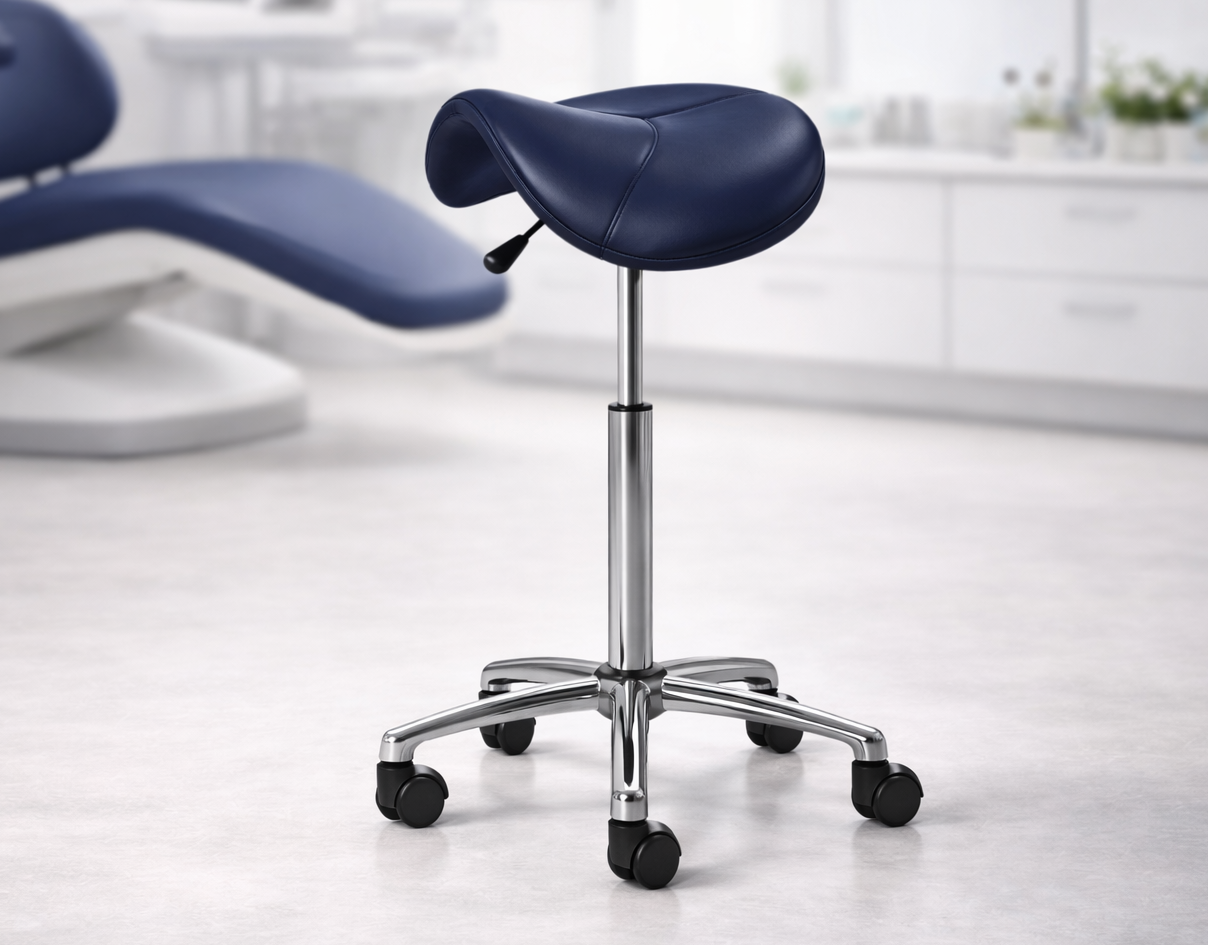
The way we subtly shift our stool for better access. The way we hike a shoulder just a little higher for a tough distal. The way we adjust our tone for a nervous patient, then adjust again for the next one. The way we catch ourselves holding our breath without meaning to.
None of these moments feel like “a big deal.” That’s the sneaky part. They feel invisible. But they stack.
By the end of the day, it isn’t one task that feels like too much. It’s the weight of having stayed engaged, precise, and responsive for hours straight.
That kind of demand doesn’t show up on a schedule. But it lives in the body.
If your body feels completely drained by the end of the day, it might not just be fatigue. Part of it can be how much your muscles are being asked to do all day.
I put together a short guide with a few simple strength moves that support the areas hygienists rely on most. It’s a really approachable place to start if you’ve been feeling this.
The nervous system side of dental hygiene
Here’s the part we don’t usually talk about in hygiene school.
Your nervous system doesn’t just respond to emergencies. It also responds to long periods of focus.
Every time you’re fully tuned in to a patient. Every time you’re tracking saliva, tongue position, mirror angle, hand position, charting details, and conversation all at once. Your system stays alert because it has to.
Not panicked, just constantly engaged.
That low-level alertness is useful for patient care. But when it stays on all day long, it’s draining.
This is why the fatigue many dental hygienists feel doesn’t always show up as obvious soreness. Instead, it can feel like:
- Your brain feeling loud by mid-afternoon
- Your patience wearing thin faster than you expect
- Your shoulders creeping up without noticing
- Feeling tense even on days that went “fine”
- Getting home and needing silence more than anything
It doesn’t feel major in the moment, but it’s cumulative.
Why resting after work doesn’t always fix it
Most of us try to solve this the logical way. We assume the answer is more rest.
So we collapse on the couch. We scroll. We zone out. We tell ourselves we just need to get to the weekend.
But often, the body doesn’t feel restored. It just feels heavy.
That’s because the system spent all day “on,” and then suddenly went straight to stillness. There’s no transition. No easing out. No real downshift.
So the tension lingers. The mental noise lingers. The feeling of being fully “on” lingers.
That’s why some hygienists can sleep a full night and still wake up feeling like they never fully came down from the day before.
What actually starts to help
For many dental hygienists, things start to change once you begin noticing what your body is doing throughout the day.
Noticing when your shoulders are raised. Noticing when your jaw has been clenched for three patients in a row. Noticing when your breath has been shallow for longer than you realized.
Those moments of awareness might seem small, but they create something we don’t get much of during clinical days: a pause.
A pause to soften the shoulders between patients.
A pause to unclench your jaw or grip on the mirror.
A pause to take one slower breath before walking into the next room.
These are tiny shifts. But they give your system a different message: you don’t have to stay in full effort all day long.
And over time, those small moments can change how the entire workday feels in your body.
The takeaway for dental hygienists
If the day felt draining and you can’t point to one clear reason, it’s usually the small moments adding up.
Most of what wears us down in hygiene isn’t loud or obvious. It’s subtle. It’s constant. And it often goes unnoticed until something small (like an ultrasonic cord) becomes the tipping point.
You don’t need a complete overhaul or a perfect routine.
Start with the moments that make you pause: the shoulder that’s inching up, the jaw that’s clenching, the breath that’s been held longer than you realized.
Those moments are useful. They tell you where your body is working harder than it needs to.
Simply start by noticing. One moment at a time. 💜