Stretching Was My First Go-To
For a long time in my hygiene career, stretching was the first thing I reached for.
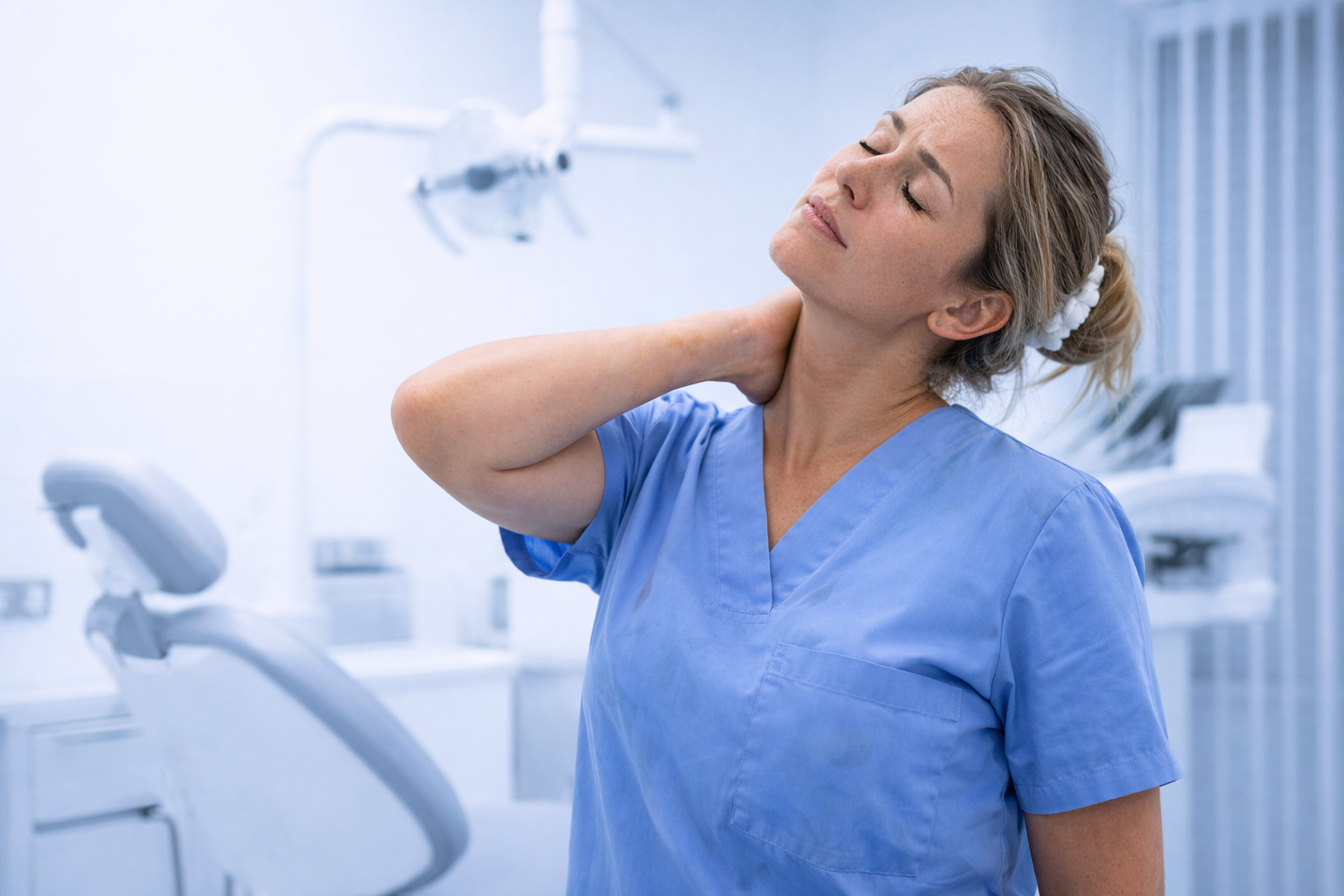
Neck tight? Stretch.
Shoulders creeping up? Stretch.
Lower back flaring up after a full day of patients? Definitely stretch.
And to be clear, stretching can help. I still use it myself and still recommend it to hygienists all the time.
But after a while, I started noticing something.
Even when I was stretching regularly, my body did not always feel fully better.
If you’ve ever thought, “Why am I still so tight?” you’re not imagining it.
Where Stretching Really Does Help
Stretching absolutely has a place for dental hygienists.
It can:
- reduce short-term muscle tension
- improve flexibility
- help you feel less stiff after long periods of sitting
- give tight areas some breathing room
Sometimes that’s exactly what the body needs in the moment, especially after a long day working on patients.
But in hygiene, the physical demands are more specific than what basic stretching alone usually addresses.
Why Many Hygienists Still Feel Tight
Here’s the pattern I kept seeing, both in myself and in other hygienists. Most hygienists I talk to are already doing something:
- stretching between patients
- pulling up quick YouTube routines
- trying to be more aware of their bodies
The issue usually isn’t effort. It’s that this job places very particular demands on the body.
- Long periods seated or standing
- Working slightly rotated
- Neck and shoulders doing steady work all day
- Very little true downtime between patients
Over time, the body doesn’t just feel tight. It can feel:
- tired
- overworked
- a little guarded
- and sometimes still “on” even after the day is done
If you’ve ever driven home and realized your shoulders are still halfway up toward your ears (and you’re driving in total silence), you know exactly what I mean.
That’s where stretching alone may not fully meet the moment.
What the Body Often Needs Alongside Stretching
For many hygienists, the body responds best when stretching is paired with a few other supportive pieces, such as:
- gentle mobility work for commonly overused areas
- light strengthening for postural support
- movement that helps the nervous system settle after a busy clinical day
- pacing that actually feels realistic when your energy is already low
When these elements start working together, things often feel different. Not overnight. But steadily.
What to Notice in Your Own Body
If you’re wondering whether stretching is enough right now, notice this:
- Do you feel better for a while, but the tightness comes right back?
- Do your neck and shoulders feel like they never fully reset?
- Do you finish the day feeling both tired and slightly wired?
If any of this sounds familiar, your body may be asking for a little more support. Not instead of stretching, but alongside it.
The Takeaway
Stretching is still a helpful tool for dental hygienists. I would not tell you to stop doing it. 😅
But for many of us, it works best as one piece of a more supportive movement routine.
If your body has been hinting that it needs something more specific for this job, it is worth paying attention to that signal.
Listen to your body. It’s usually giving you good information. 💜