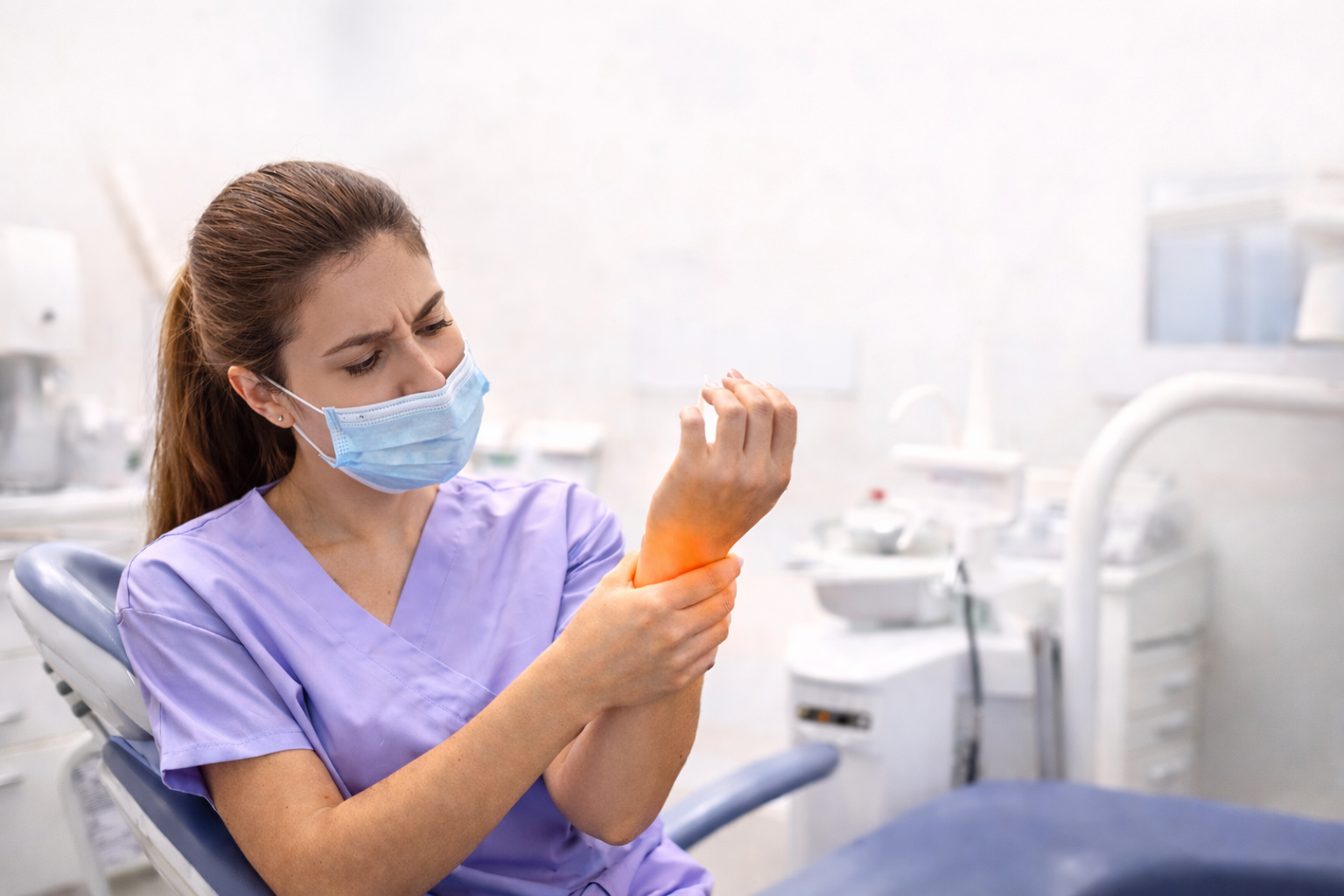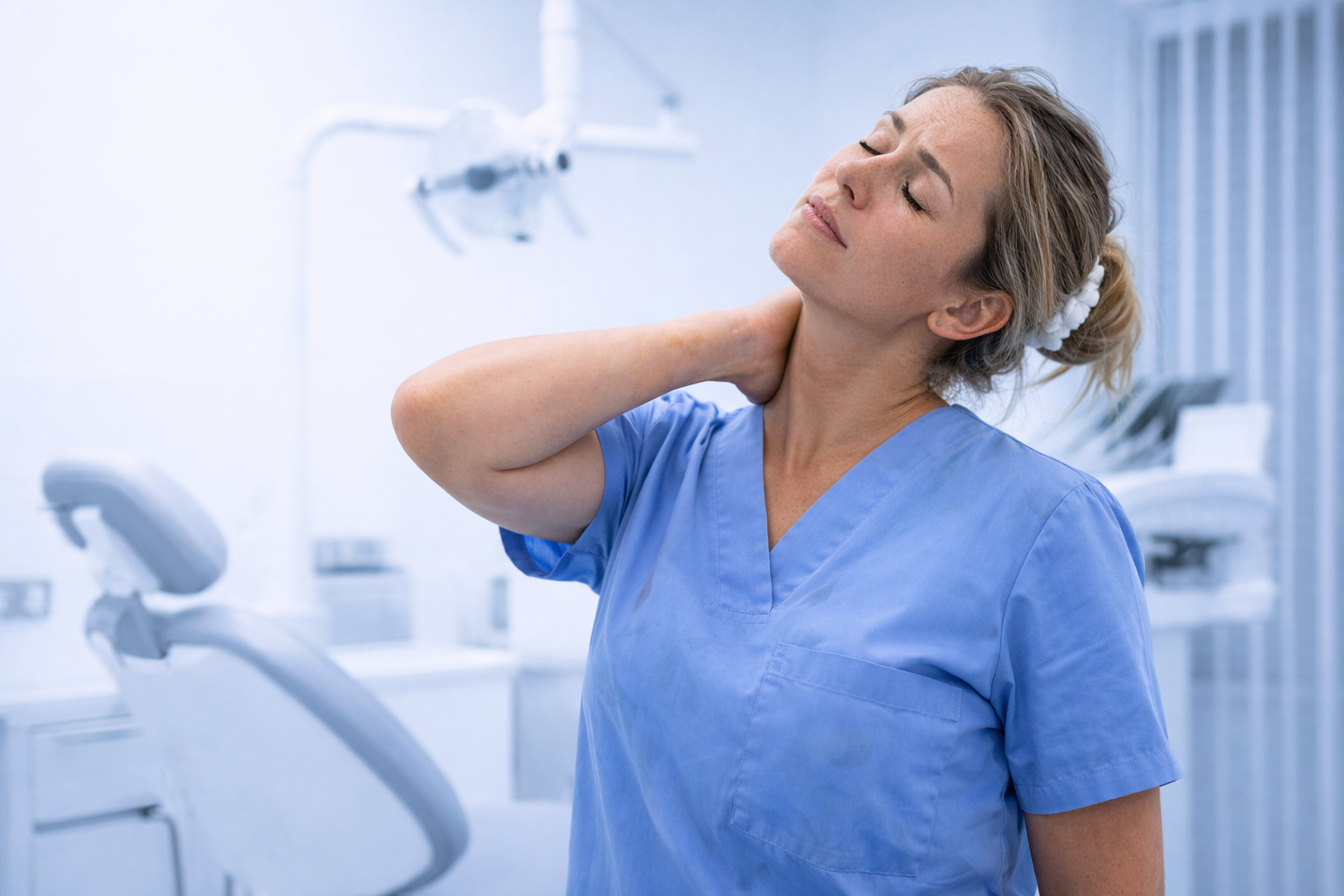
She went home on a Thursday after a long week in so much pain, her back, her neck, everything.
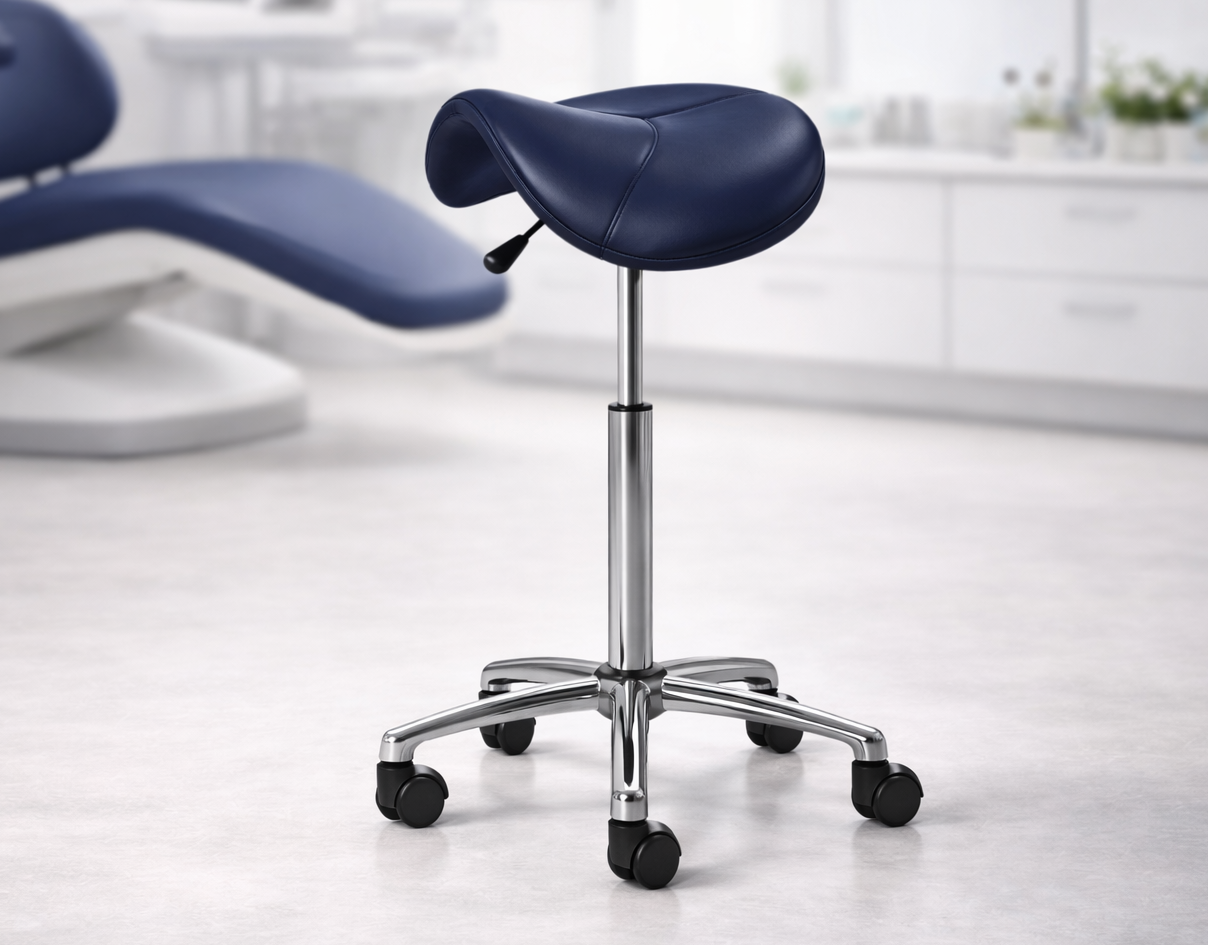
A hygienist I was talking to recently told me she went on Amazon that night and ordered a saddle stool. By Monday, she was using it, convinced it would fix everything. That her posture was the problem.
She was already teetering on the edge of burnout.
But it didn’t help.
And she’s not the only one.
Many dental hygienists turn to things like a saddle stool or ergo loupes, hoping they’ll finally fix their posture and relieve some of the strain from long clinical days.
And to be fair, these tools can help.
But they don’t always solve the problem people think they’re solving.
If you’ve ever changed your setup and still ended the day with a tight neck, aching back, or burning shoulders, you’ve probably already felt this.
Does a Saddle Stool Actually Improve Your Posture as a Dental Hygienist?
It’s easy to assume posture is something you can fix with the right setup.
A better chair. Different loupes. A small adjustment in how you sit.
And while those things can absolutely support you, they don’t change what your body is being asked to do all day.
You’re still working on patients for hours at a time. Your arms are still lifted, your eyes are still focused, and your body is still holding steady in one position for long stretches.
That workload doesn’t go away just because you changed your seat.
Where a Saddle Stool Can Help
To be clear, a saddle stool isn’t a bad thing.
For some hygienists, it can be a really helpful change.
It can encourage a more upright position through the hips and pelvis. Some people feel like they can sit taller without as much effort, and it may take a little pressure off the lower back compared to a traditional stool.
For certain body types and operatory setups, it can also make it easier to move around the patient without feeling as restricted.
It’s also worth mentioning that saddle stools tend to work best when they’re properly fitted to your body. Seat height, tilt, positioning, and even seat width all play a role. And without that, it’s easy to end up in a position that doesn’t feel much different than what you were already doing.
So yes, there are benefits.
And if you’ve switched to a saddle stool and noticed some relief, that’s a great sign your body is responding to a change in position.
Where It Starts to Fall Short
But here’s where things get a little more nuanced.
A saddle stool can change your position, but it doesn’t change what your body is being asked to do all day.
You’re still working on patients for hours at a time. Your arms are still lifted, your eyes are still focused, and your body is still holding steady in one position for long stretches.
And that’s where many hygienists get stuck.
They make the switch, expecting everything to feel better, and when it doesn’t, it’s frustrating.
Because it feels like you did the “right” thing.
What Actually Helps Your Posture in Dental Hygiene
If a saddle stool doesn’t fully solve the problem, it’s easy to feel stuck.
But posture in dental hygiene isn’t just about positioning. It comes down to how well your body is supported through the entire day.
Your body is being asked to stay steady and controlled for hours at a time while you’re working on patients, and that requires more from your muscles than most people realize.
Everything works together here. The wrists, forearms, shoulders, upper back, and core all share the load, with the hips and glutes supporting from the base. When one area starts to fatigue, something else usually steps in to compensate.
That’s often when you start to notice the small shifts. A tighter grip, a shoulder creeping up, leaning forward just a little more than you intended.
When the muscles that support you are stronger and better prepared for that kind of workload, those compensations tend to happen less. You’re not constantly adjusting or bracing without realizing it, and your body feels a little more steady by the end of the day.
Small habits can help here, too.
Sometimes that looks like taking a few seconds between patients to move your wrists or reset your shoulders as you walk to the front desk. Other times, it means adding in a few strength-focused movements that support the areas you rely on most in the operatory.
It doesn’t have to be complicated, but it does need to be consistent.
The Takeaway
A saddle stool can be a helpful change, but it’s not a complete solution.
Posture in dental hygiene isn’t just about how you sit. It’s about how your body is supported while you’re working on patients.
Looking at the bigger picture, including strength, movement, and how your body handles the day-to-day workload, can make a noticeable difference over time.
Want a Place to Start?
If you’ve been feeling this and don’t know where to begin, I put together a short guide with a few simple strength moves that support the areas hygienists rely on most.
They’re quick, approachable, and designed to fit into your routine without adding more stress to your day. 👇