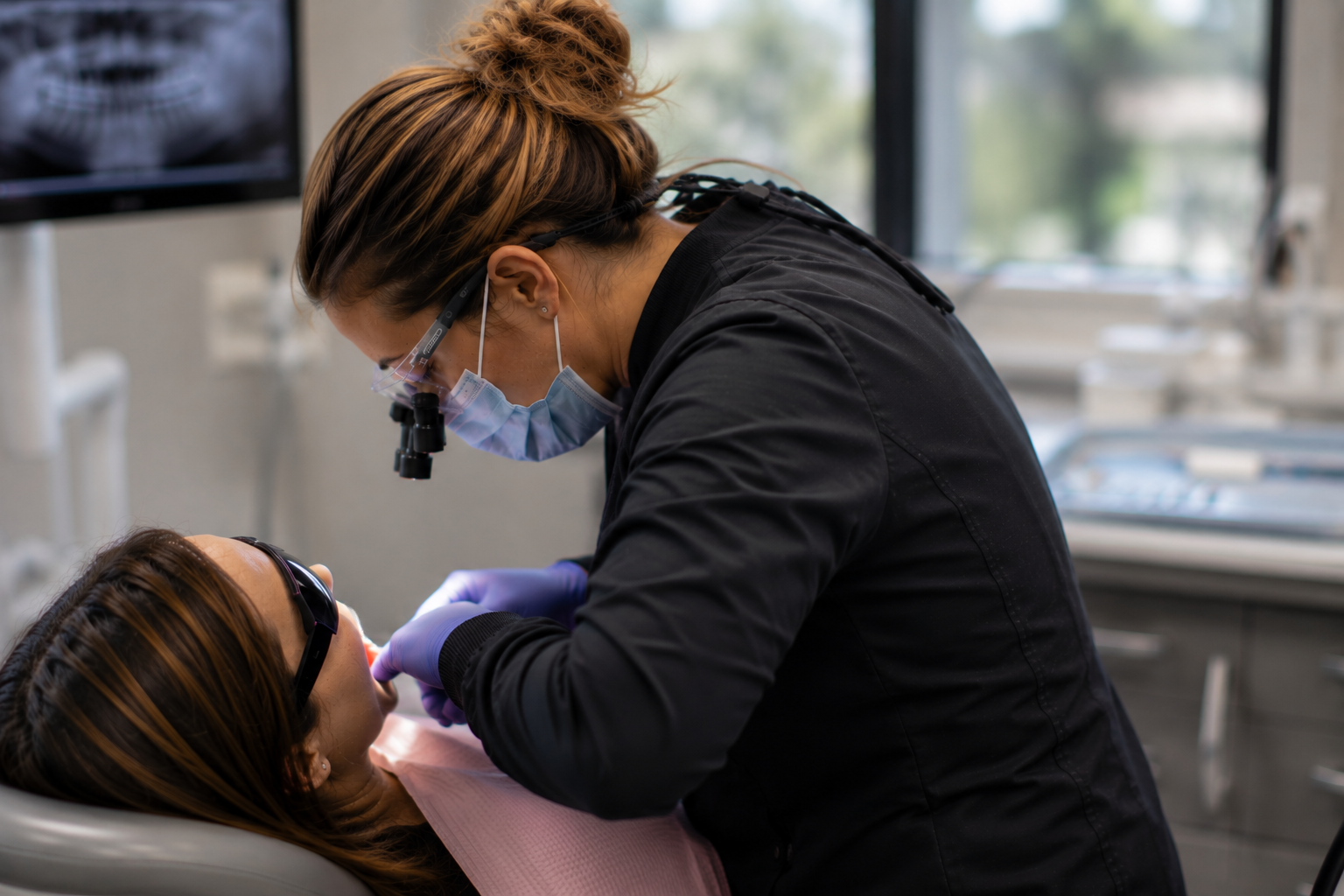

I remember working on my case patient in dental hygiene school. I was the last one left in clinic, already running into lunch, and I was desperate to finish a competency.
My hands were in full “death grip” mode on my instrument, racing against the clock, when my instructor stopped me.
“Put your instrument down and stretch your fingers.”
“I don’t have time,” I shot back.
She looked right at me and said, “Yes, you do. And you need to remember that when you enter the field. It takes two seconds, and it can save you years of wrist and hand pain.”
That moment has stayed with me to this day.
What felt like “wasting time” in the moment was actually one of my first lessons in protecting my body as a hygienist.
Because once you start seeing patients all day, the repetitive load on your hands and wrists adds up quickly.
Why Wrist Pain Is So Common in Dental Hygienists
Dental hygiene requires a lot of fine motor, repetitive handwork. Those small movements place a significant load on the hands and forearms over time.
When you’re scaling, exploring, and probing, your wrists are constantly performing small, controlled motions. They may look subtle from the outside, but they repeat again and again throughout the day.
In fact, hygienists can perform 30 or more wrist movements per minute while instrumenting!
Now multiply that by:
- a full hour with a patient
- several patients in a row
- multiple days a week
- and years in the profession
It adds up quickly.
Most of the strain doesn’t come from one large movement. It comes from repetition and sustained grip. Holding instruments in a pinch grip for extended periods places continuous strain on the small muscles and tendons in the hands and forearms.
Over time, that repetitive load can lead to things like:
- aching wrists at the end of the day
- forearm fatigue
- decreased grip strength (ironic, I know)
- tingling or numbness in the fingers
Many hygienists assume this discomfort is simply part of the job. Something you learn to live with. But more often, it’s a sign that the tissues in the hands and forearms are being asked to do more work than they’re prepared to handle.
Looking Further Up the Chain
While the wrists and hands often get the blame, they rarely work alone.
Dental hygiene requires steady hand movements, but those movements are supported by the entire upper body. The neck, shoulders, upper back, and arms all help stabilize the hands while you work on patients.
Think about a typical clinical posture.
Your arms are lifted slightly away from your body. Your head is positioned slightly forward so you can see clearly. Your shoulders and upper back are working constantly to keep everything steady.
By the middle of a long day, many hygienists notice the same thing. The muscles around the shoulder blades start to burn. The neck feels tight. The upper back feels tired.
👉 Why Dental Hygienists Feel So Sore After Work
When those larger muscles become fatigued, the smaller muscles further down the chain often end up doing more of the work. That extra workload frequently shows up in the wrists and forearms.
But muscles are only part of the picture.
The nerves that travel from the neck down through the shoulder and into the arm can also be affected by static postures and muscle tension. When the tissues around those nerves become restricted or irritated, the symptoms can travel down the arm and show up as wrist pain, hand fatigue, or tingling in the fingers.
Many hygienists have experienced this without realizing what was happening. A tight neck or upper back can easily influence how the hands feel at the end of the day.
This is one reason it helps to look beyond the wrist itself. Sometimes the source of the tension is further up the chain.
If you’ve ever felt a “knot” in your shoulders or upper back after a long clinical day, that sensation is often related to the surrounding fascia and muscle tension that build up from sustained posture. I talk more about this in my article explaining why those so-called “knots” form and how myofascial release can help.
Since the body works as a connected system, improving movement and reducing tension higher up the chain can bring relief further down the arm.
Early Signs Your Wrists Are Getting Overloaded
Wrist pain rarely appears overnight.
More often, hygienists notice small warning signs first.
Things like:
- forearms that feel tight or tired after work
- hands that ache while driving home
- fingers that feel stiff when handling instruments
- grip strength that seems weaker at the end of the day
These signals are easy to ignore, especially when the schedule is full, and you’re focused on taking care of your patients and staying on time.
But those early signs are often the body’s way of asking for a little more support.
What Actually Helps Protect Your Wrists
Early in my career, I assumed wrist pain meant I just needed to stretch my hands more often.
And stretching can absolutely feel good in the moment.
But over time, I realized something else was just as important: strength and support from the muscles higher up the chain.
The wrists rely on help from the forearms, shoulders, and upper back to handle the repetitive workload of clinical practice.
When those muscles are stronger and better prepared for the load, the hands and wrists don’t have to work quite so hard on their own.
Small habits can make a difference, too.
Sometimes that looks like taking a few seconds between patients to open and close your fingers. Other times, it means adding a few strength exercises that support the muscles you rely on every day in the operatory.
Over time, these habits can support your hands and wrists for the long haul.
A Few Strength Moves That Support Hygienists
If you’re a dental hygienist dealing with wrist or forearm fatigue, strengthening the muscles that support your hands can go a long way.
I put together a short guide called 5 Strength Training Moves to Survive Hygiene Life.
These movements focus on the upper back, shoulders, core, and forearms that carry so much of the load when you’re working on patients.
You can download the guide below and start incorporating a few of these movements into your routine.
The Takeaway
Dental hygiene asks a lot from the hands and wrists.
But those small joints don’t work in isolation. They rely on support from the forearms, shoulders, neck, and upper back to keep up with the repetitiveness of working on patients all day.
Sometimes protecting your wrists starts by looking further up the chain.
When you build strength, reduce tension, and support the areas doing the behind-the-scenes work, your hands don’t have to carry everything on their own.
Small habits and a little awareness can go a long way toward helping your body feel better at the end of the day, and over the course of your career.
Your body should support you, not the other way around. 💜