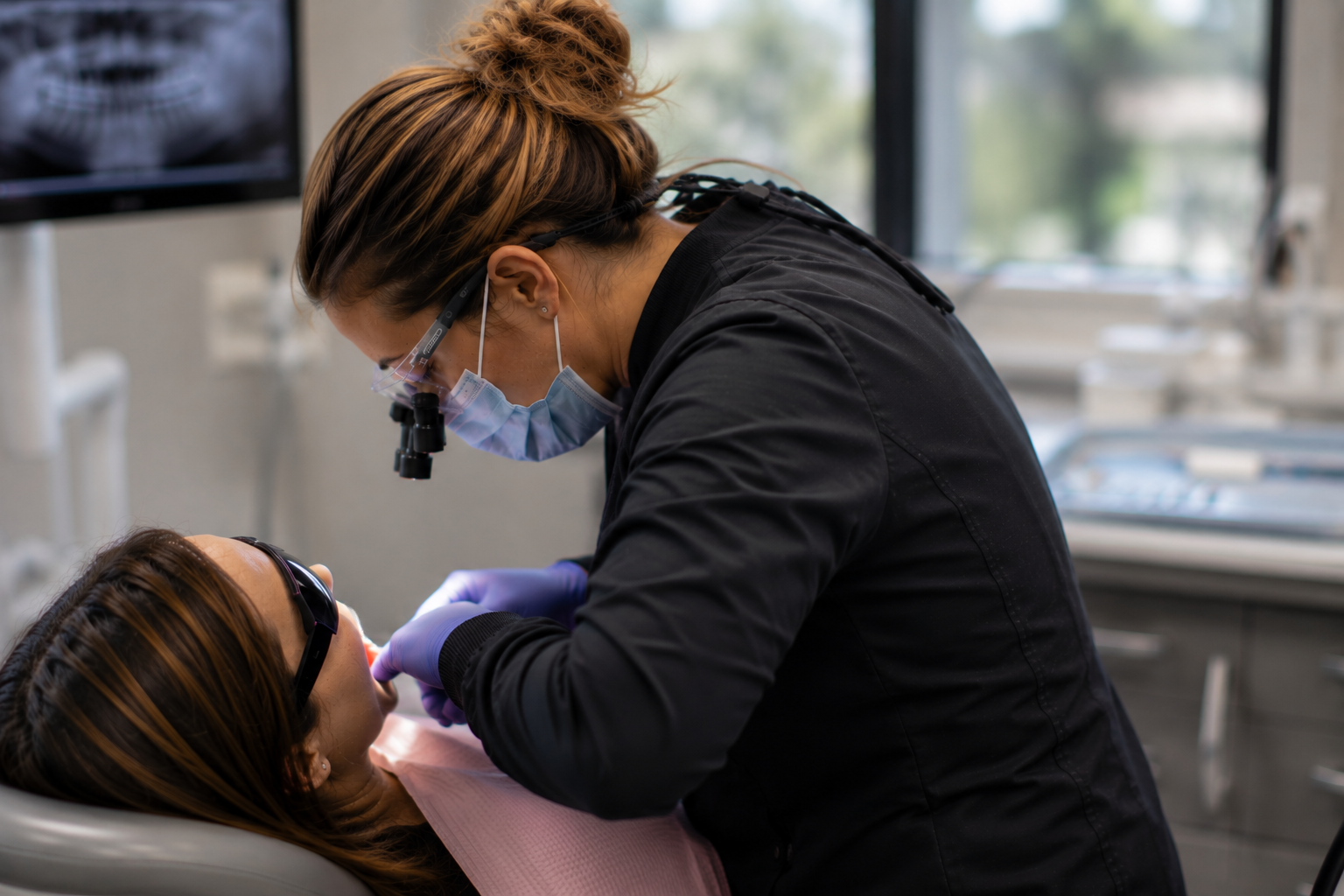
You graduate. You invest in ergonomic loupes. You sit in a saddle chair. You remind yourself to sit up straight, relax your shoulders, and hinge at the hips.
And yet… by day three or four of the workweek, something starts to ache.
Maybe it’s your shoulder blades. Maybe it’s your lower back. Maybe it’s just that subtle, nagging discomfort that makes you pause and think, “Am I missing something?”
Many dental hygienists follow positioning guidelines carefully and still notice physical strain early in their careers, or unexpectedly years later. That’s because proper positioning involves more than how you sit or stand. It also depends on how your body is supporting you while you work on patients all day.
Let’s break that down.
Why Proper Positioning Alone Doesn’t Always Feel Supportive
Most conversations around positioning in dental hygiene focus on:
- where your stool is
- how the patient is positioned
- where your head, feet, and elbows should be
Those things matter. A lot.
But positioning assumes your body already has:
- enough shoulder stability to hold your arms for long periods
- enough upper-back endurance to stay upright without excess tension
- enough mobility to rotate, reach, and adjust throughout the day
When those pieces aren’t fully there (which is common), the body compensates. Certain muscle groups take on more work, tension builds, and fatigue shows up even when posture looks “correct”.
That’s why many hygienists notice:
- “I’m mindful of my posture, but I still feel sore.”
- “I use ergonomic equipment, but my shoulders burn by day three.”
- “I feel fine early in the week, then it slowly creeps in.”
Positioning may look good on the outside, while the body is working overtime underneath.
What Hygienists Are Describing When They Talk About Shoulder Blade Pain
For example, when hygienists mention shoulder blade discomfort, they’re often feeling:
- tension between the shoulder blades
- an ache along one side of the upper back
- fatigue that worsens as the day goes on
This area plays a huge role in hygiene. It stabilizes the arm during scaling, controls fine motor movements, and keeps the shoulders from creeping up or rolling forward while working on patients.
When those stabilizing muscles fatigue, larger muscles step in to help. Over time, that extra work can feel like tightness, burning, or persistent soreness… even when positioning appears “aligned”.
Why This Often Shows Up in Newer Hygienists
Many hygienists expect physical strain to show up decades into their career.
In reality, newer hygienists often notice it sooner because they’re working multiple clinical days in a row, their muscles haven’t adapted to the repetitive demands yet, and they’re trying very hard to “do everything right”. (This was me. 🙋🏻♀️)
Sometimes that effort turns into holding tension without realizing it.
Awareness helps, but support matters too.
Proper Positioning Is a Foundation
Positioning creates alignment. Alignment works best when the body underneath it has enough strength, mobility, and endurance to maintain it throughout the day.
That’s why hygienists who have lasted decades often mention movement outside of work: strength training, Pilates, yoga, or mobility work. These practices help their bodies keep up with the repetitive demands of clinical hygiene.
Common Positioning Habits That Contribute to Strain
Most hygienists aren’t choosing poor positioning. These habits usually develop because the job asks a lot of the body, hour after hour.
A few patterns show up again and again:
Holding the arms slightly away from the body
Even a small amount of arm lift, held repeatedly throughout the day, increases demand on the upper back and shoulder stabilizers. It doesn’t look like much, but over several patients, it adds up.
Shoulder tension you don’t notice until it’s there
Many hygienists don’t realize their shoulders are creeping up toward their ears or staying subtly braced until discomfort shows up later in the day. This often happens when you’re concentrating, working on difficult areas, or stressed for time. (So yes… pretty much all the time.)
Reaching from the same side, over and over
Reaching for suction, tray tables, or instruments isn’t inherently a problem. It’s part of clinical work. The issue shows up when those reaches happen from the same side, in the same direction, patient after patient.
Over time, that one-sided repetition asks the muscles around the shoulder blades to stabilize from similar angles again and again, which can contribute to fatigue as the day goes on.
Staying “perfectly positioned” for too long
Trying to hold one “ideal” posture without variation can increase fatigue. The body does better with small shifts, weight changes, and micro-adjustments than with rigid stillness. (We’re not robots. 😉)
Simple Ways to Support Your Body Without Overhauling Everything
Supporting your body doesn’t have to mean big changes or complicated routines. Small, consistent forms of support can make daily positioning feel more manageable.
Build tolerance, not just awareness
Awareness helps you notice tension, but endurance helps you hold better positions longer. Gentle strength work for the upper back, shoulders, and core can make positioning feel easier instead of forced.
Let movement happen throughout the day
Instead of aiming for one perfect posture, allow yourself to:
- reset your position when swapping instruments
- shift your weight occasionally (just try not to lean to one side too often)
- adjust your seat height or stance when you feel fatigue building
These small changes reduce cumulative strain.
Pay attention to your breath
Many hygienists unknowingly hold their breath while focusing. Slow, steady breathing helps reduce upper-body tension and keeps the shoulders from bracing unnecessarily.
Think “support,” not “correction”
Rather than constantly fixing posture, focus on what helps your body feel steadier and less taxed by the end of the day. When the body feels supported, positioning tends to improve naturally.
The Takeaway
Proper positioning matters.
But positioning works best when it’s paired with strength, mobility, and small moments of support throughout the day.
If discomfort tends to creep in by the middle of the week, it often reflects how much demand the job places on your body over consecutive clinical days.
That’s something you can build support for over time. 💜