Recently, I heard from a hygienist who said that by the end of the day, her upper back feels like it is on fire, and she wishes she knew what exercises would actually help. She said stretching and massage give temporary relief, but nothing seems to change the underlying problem. I have heard versions of this from many hygienists who are searching for strength training for dental hygienists to help their bodies feel supported through long clinical days.
If your body has ever felt overwhelmed by the physical demands of hygiene, please know that many hygienists feel the same way and that there’s a way to reduce that strain so your body doesn’t have to work so hard.
Why Pain Is So Common in Dental Hygiene
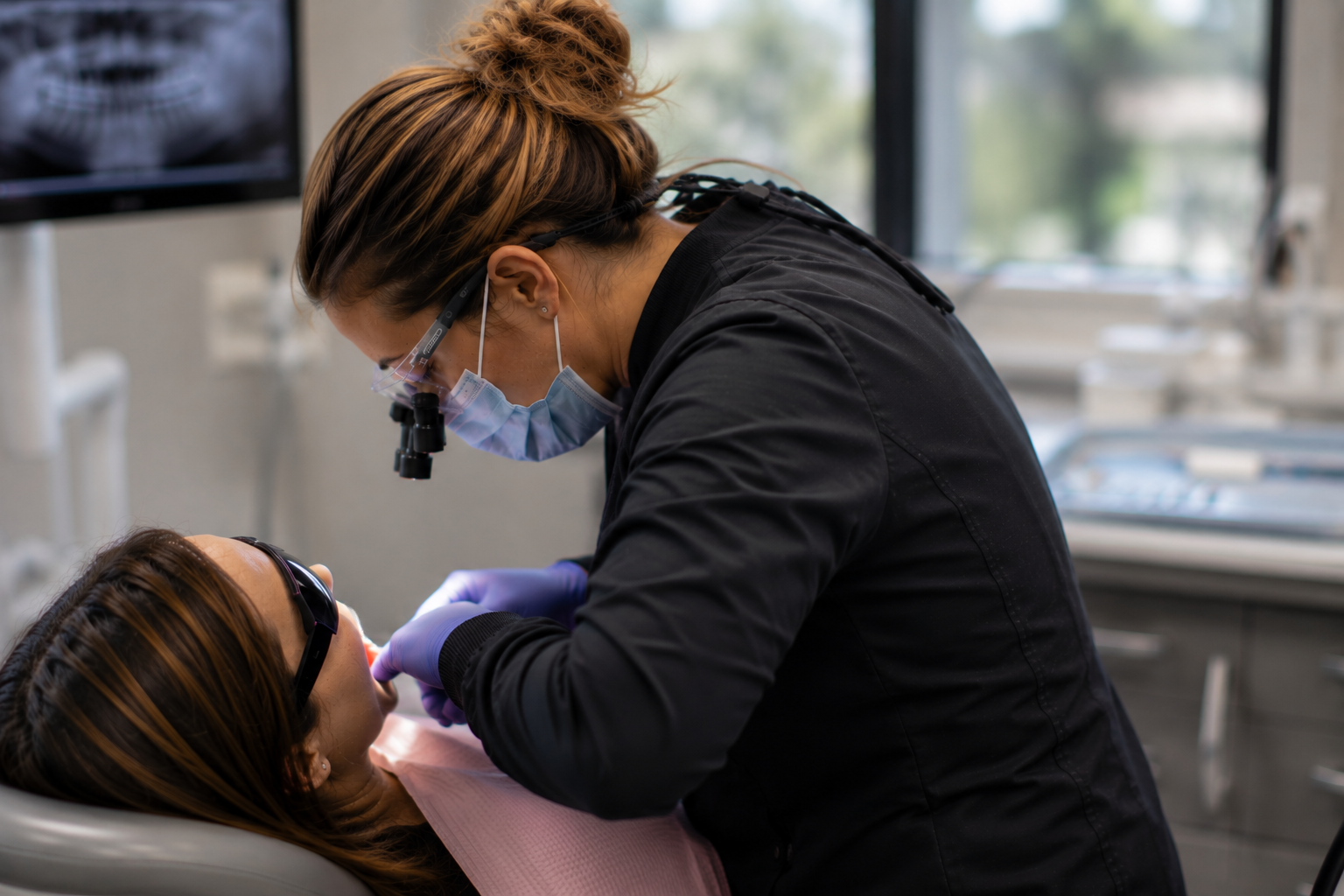
Dental hygiene is physically demanding in a way most people outside the profession do not fully understand. Long periods in static postures. Fine motor control. Forward head position. Internal rotation of the shoulders. Repetitive flexion at the wrists and elbows. Hours of gripping instruments without real breaks. (What I would give to sit with a cup of coffee for a few minutes!)
When the same muscles work without balance, the body begins to compensate. Some muscles take on more than they’re meant to. Others weaken from lack of use. Over time, those imbalances lead to tension, inflammation, and pain that lingers long after the workday ends.
Stretching can feel amazing in the moment. Massage can loosen things temporarily. Both are great and absolute necessities, but neither addresses the need for strength and stability.
If the supportive muscles aren’t strong enough to share the load, the same pain returns again and again.
Many hygienists first start thinking about strength training when they notice how sore they feel after long clinical days. 👉 Why Dental Hygienists Feel So Sore After Work (And What Helps)
How Strength Training Supports Dental Hygienists
Strength training is one of the most effective ways to reduce pain and improve longevity in the operatory. It builds support where the body needs it most.
Strength training helps:
- Improve posture by strengthening the upper back and scapular stabilizers
- Support cervical spine and shoulder alignment
- Reduce gripping tension by improving forearm and shoulder endurance
- Distribute workload more evenly throughout the whole body
- Increase stability and control during fine motor movements
When your core and upper back are strong enough to support your posture, your neck doesn’t have to fight so hard to hold your head up.
When your shoulders and scapular muscles are stable, your upper traps don’t need to stay clenched all day.
When your hamstrings and glutes are strong, your lower back stops carrying the burden alone.
Strength training for dental hygienists does not need to mean heavy weights or long workouts. We just need to teach the right muscles to turn on so the overworked ones can rest.
Where to Start With Strength Training for Dental Hygienists
You don’t need an hour at the gym. You don’t need complicated equipment. Small, consistent strength-focused movement can change how your body feels throughout the day.
A good starting point includes exercises that focus on:
- Upper back and scapular support
- Shoulder external rotation for stability
- Deep core activation for posture
- Glute strength for lower back support
Even 10 minutes two or three times a week can start to create noticeable relief.
Movement should help your body feel supported, not stressed.
Want a simple plan already made for you?
If deciding what to do feels overwhelming or you are tired of guessing what might help, I made something to help you get started with confidence: 5 Strength Training Moves to Survive Dental Hygiene Life.
Five targeted exercises designed specifically for the most common pain patterns in dental hygiene. Easy instructions you can follow anywhere, created for real clinical bodies, real fatigue, and real-life schedules.
Download it free here ⬇️
5 Strength Training Moves to Survive Dental Hygiene Life
What Happens Without Strength
Without strength, muscles that are meant to support your posture continue to fatigue.
Compensation patterns build. Pain spreads. Work becomes harder than it needs to be.
Pain is not a sign that your body is failing. It is a sign that it needs support.
Small strength creates big protection over time.
The Takeaway
You do not have to push through pain to do your job. You do not have to accept soreness as normal. You do not have to feel broken at the end of the day.
You just need a body that feels supported and strong enough to carry you through your work.
Start today with something simple ⬇️